Hydraulic Pressed Sesame Oil: Uses and Buying Guide
Sesame oil has played an important role in Indian cooking for generations. Its distinctive aroma and nutty flavour make it a popular choice for dals, vegetables and traditional recipes. Today, however, consumers want to understand not only the taste of cooking oil but also its extraction process and quality. Therefore, hydraulic pressed sesame oil has become an interesting option for people exploring different types of cooking oils.
At Vikeshi Naturals, we believe that informed consumers make better food choices. For this reason, we help our customers understand the processing, characteristics and everyday uses of food products.
What Is Hydraulic Pressed Sesame Oil?
Hydraulic pressed sesame oil comes from sesame seeds that a hydraulic press squeezes under mechanical pressure. The machine applies pressure to the seeds and releases their natural oil.
However, the extraction method alone does not determine the final quality. The quality of the sesame seeds, processing conditions, filtration, storage and packaging also influence the finished product. Therefore, always review the product label and manufacturer information before buying sesame oil.
How Does the Hydraulic Pressing Process Work?
During hydraulic pressing, manufacturers place prepared sesame seeds inside a press. Next, the machine applies pressure and extracts the oil from the seeds. This mechanical method differs from solvent-based extraction, which uses solvents to separate oil from the raw material.
Nevertheless, hydraulic pressing does not automatically mean that the manufacturer avoids heat or refining. If you prefer unheated or unrefined sesame oil, check the manufacturer’s processing details. In addition, verify any extra virgin or cold-pressed claims before making your purchase.
Key Uses and Characteristics of Sesame Oil
1. Distinctive Flavour and Aroma
Sesame oil adds a characteristic nutty flavour and aroma to many dishes. For example, you can use it in dals, vegetables, tempering and traditional Indian recipes. As a result, it offers a distinctive flavour option for everyday cooking.
2. A Source of Unsaturated Fats
Sesame oil contains unsaturated fatty acids. Moreover, replacing some sources of saturated fat with unsaturated fats can support a balanced dietary pattern. However, the total amount of oil you consume and the balance of your overall diet also matter.
3. Versatile Everyday Cooking
You can use sesame oil in a variety of dishes, depending on its flavour and processing characteristics. For instance, it can complement vegetable preparations, dals and selected regional recipes. Therefore, choose an oil that suits your cooking style and the flavour you prefer.
4. A Part of Traditional Indian Cuisine
Indian households have used sesame oil in regional cooking traditions for generations. Furthermore, its distinctive flavour makes it a familiar ingredient in many traditional dishes. Today, consumers can explore different sesame oil products while considering their ingredients, processing methods and packaging.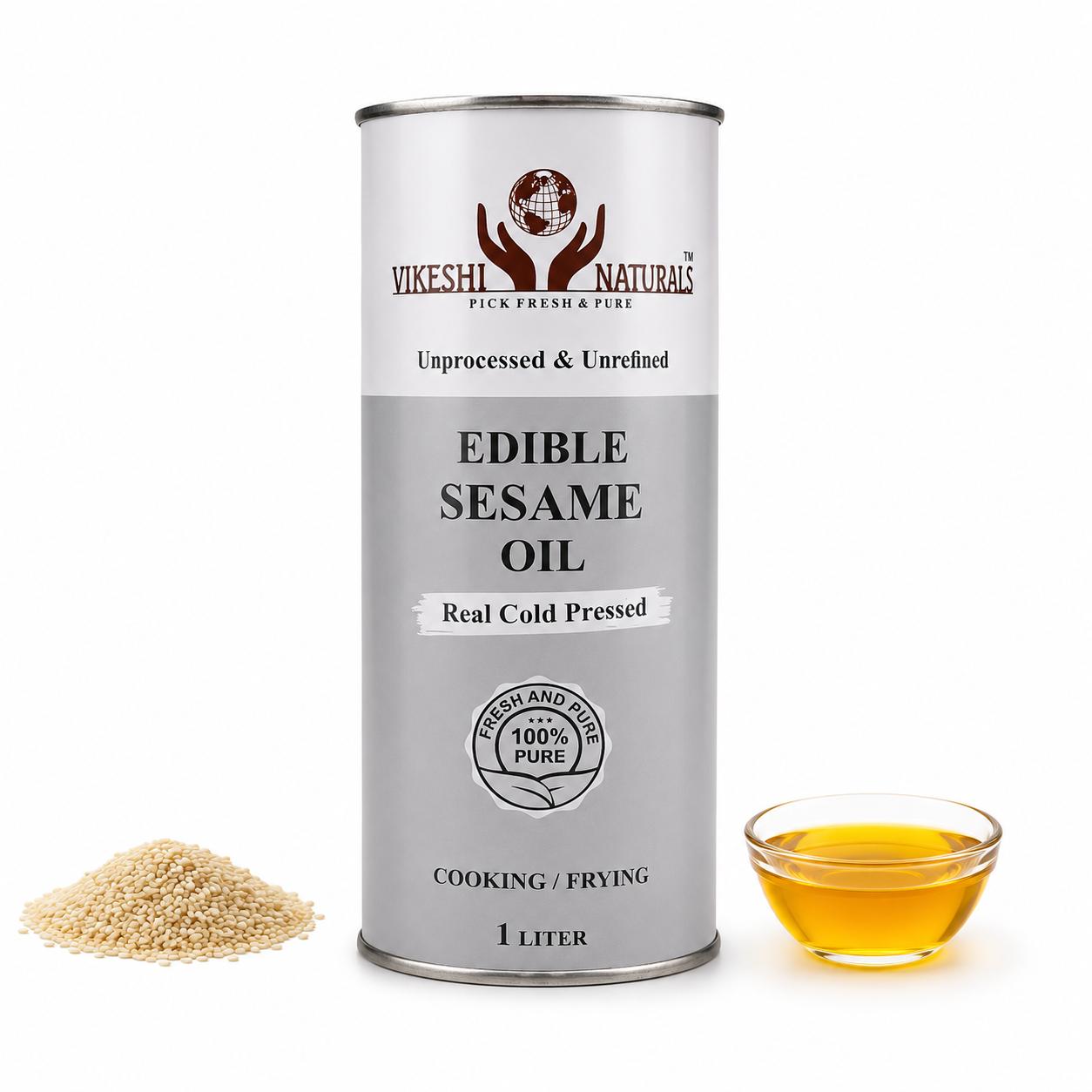
How to Choose Quality Hydraulic Pressed Sesame Oil
Before buying hydraulic pressed sesame oil, consider the following practical tips.
- Read the label: First, check the ingredients, manufacturer’s details and extraction method.
- Inspect the packaging: Next, choose a properly sealed bottle that helps protect the oil from excessive exposure to air and light.
- Check freshness: Also, review the manufacturing date, best-before date and storage instructions.
- Verify product claims: Furthermore, check claims such as unrefined, unheated or extra virgin against the manufacturer’s product information.
- Store it correctly: Finally, keep the bottle in a cool, dry place away from direct sunlight and close the cap tightly after each use.
By following these steps, you can compare different sesame oil products more confidently and select one that suits your preferences.
Explore Sesame Oil from Vikeshi Naturals
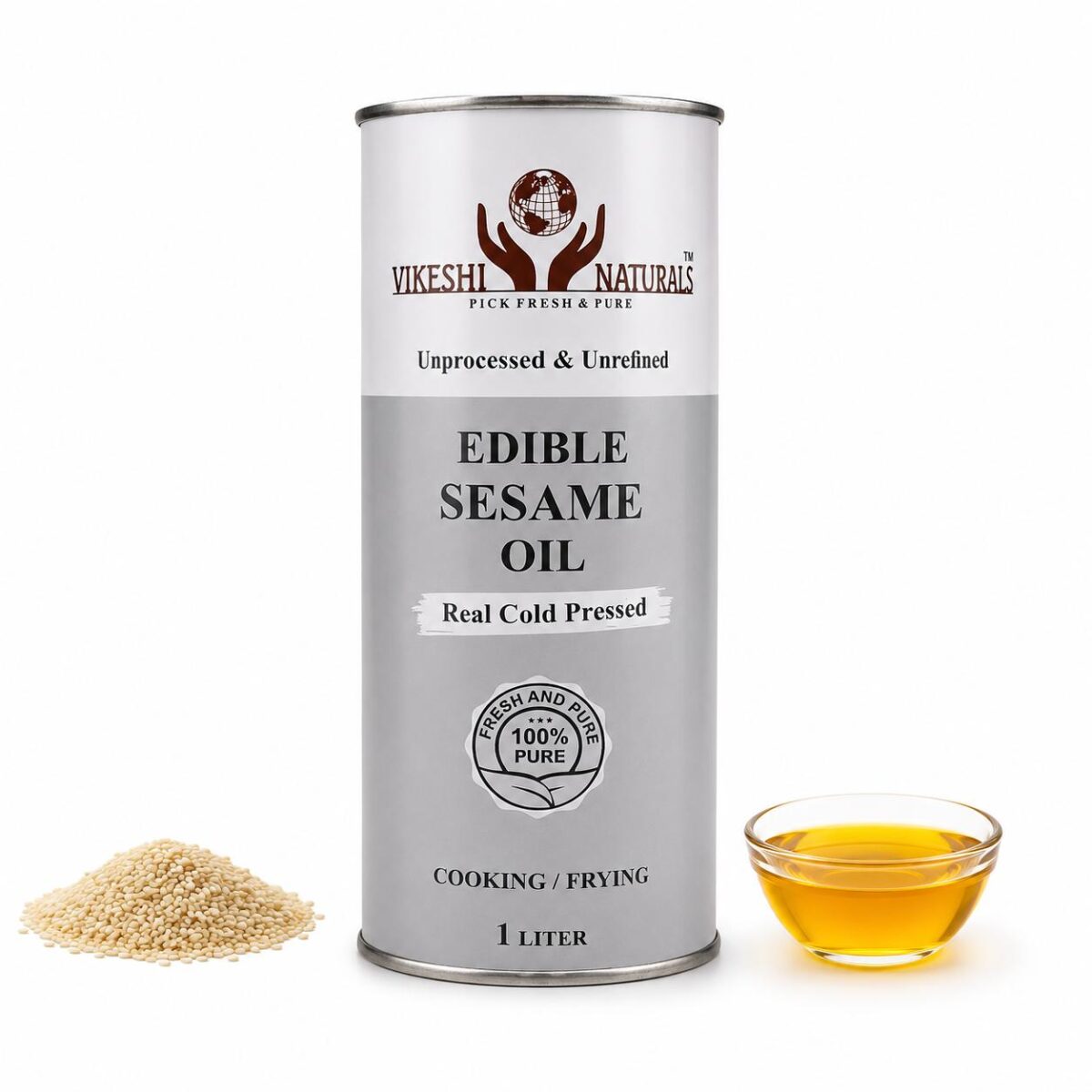
At Vikeshi Naturals, we focus on helping consumers learn about food products for everyday use. If you are exploring our sesame oil, review the product description, extraction method, packaging and usage instructions. This information can help you understand the product before making a purchase.
Whether you prepare dal, season vegetables or cook traditional Indian dishes, choosing a suitable cooking oil can contribute to an enjoyable food experience. Moreover, understanding the product’s characteristics helps you make a more informed decision.
Explore Vikeshi Naturals to learn more about our sesame oil and other food products. Compare the available information, understand the product specifications and choose an option that meets your cooking needs.
Frequently Asked Questions (FAQs)
1. What is hydraulic pressed sesame oil?
Hydraulic pressed sesame oil comes from sesame seeds that a hydraulic press squeezes under mechanical pressure. This process releases oil from the seeds.
2. Is hydraulic pressed sesame oil the same as cold-pressed sesame oil?
No, the terms do not necessarily mean the same thing. Hydraulic pressed describes the equipment and extraction process, whereas cold-pressed generally refers to temperature conditions during extraction. Therefore, check the manufacturer’s processing details before choosing a product.
3. How can I use sesame oil in cooking?
You can use sesame oil in dals, vegetables, tempering and various traditional Indian recipes. However, choose the oil according to its flavour, processing characteristics and intended cooking method.
4. How should I store sesame oil?
Store sesame oil in a cool, dry place away from direct sunlight. In addition, close the bottle tightly after every use to help maintain its quality.
5. What should I check before buying sesame oil?
First, review the ingredients and extraction method. Then, check the manufacturing date, packaging, storage instructions and manufacturer’s quality claims. Finally, choose a product that meets your requirements.